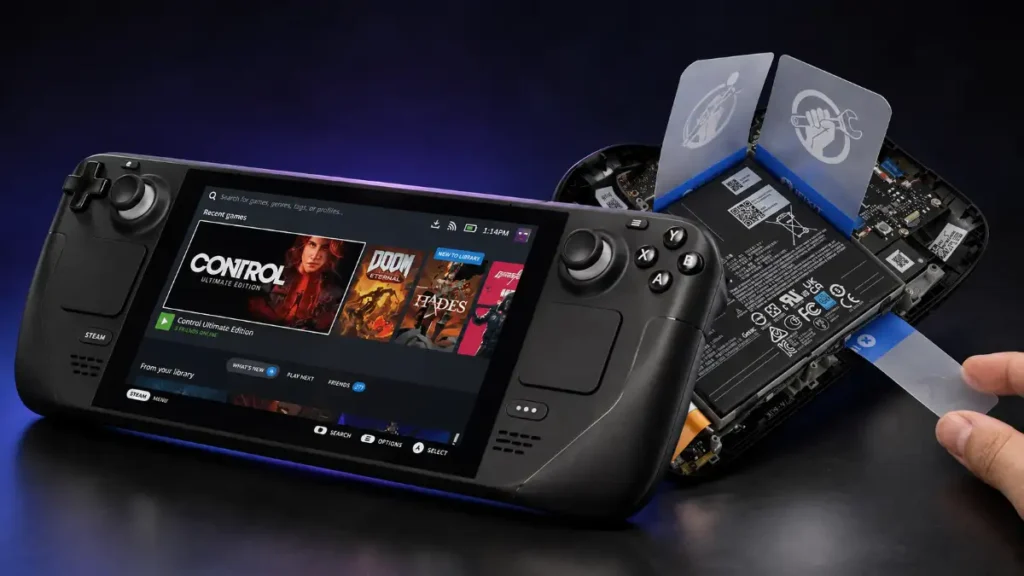
The original Steam Deck LCD battery is finally back in stock at iFixit, and that news should feel like a win for anyone still rocking the first-generation handheld. Yet the celebration comes with a catch that many owners will notice right away. Valve’s official replacement 40Wh pack now sits at $129.99, a sharp climb from the $79.99 price it carried before it disappeared from shelves. For players who have kept their LCD models running through heavy play sessions, travel, and the occasional drop, this restock changes the math on what it costs to keep the device alive.
Repair culture around the Steam Deck has always been one of its quiet strengths. iFixit has partnered with Valve to offer genuine parts and clear guides, making battery swaps realistic for people who are willing to open the device. When the official LCD battery vanished for a stretch, many owners started hunting for alternatives or simply putting off the repair. Its return is welcome, but the new price tag forces a fresh look at the economics of owning the older model in 2026.
Official Pricing Shifts for Steam Deck LCD Battery Options
The most immediate change is the cost of the genuine Valve 40Wh battery. What once sold for $79.99 now asks for $129.99, a $50 increase that works out to roughly a 62 or 63 percent jump. That single number stands out even more when you place it next to the rest of the battery lineup on the same store page.
The OLED model’s official 50Wh battery remains priced at $79.99. It offers higher capacity and still sits at the old price point that LCD owners used to enjoy. Meanwhile, iFixit continues to stock a third-party LCD battery for $79.99, giving budget-conscious buyers a direct alternative that matches the previous official price. The full LCD Fix Kit, which bundles the battery with the necessary tools, has also moved upward and now lands around $134.99, up from earlier listings that hovered between $84.99 and $89.99.
These numbers create an unusual situation. The smaller-capacity official battery for the older hardware now costs more than the larger official battery for the newer hardware. Players comparing options side by side will notice that the LCD model no longer gets the better deal on genuine parts.
Why the Steam Deck LCD Battery Price Increase Stands Out
Capacity numbers help explain why the hike feels especially steep. The OLED battery is rated at 50Wh, which works out to roughly 6,470 mAh. The LCD’s OEM pack is rated at 40Wh, or about 5,313 mAh. In everyday terms, the newer battery stores more energy and still costs less when bought as an official spare. LCD owners are being asked to pay a premium for the smaller pack simply because it is the part that matches their hardware.
This matters for more than just the sticker price. Many Steam Deck LCD units have been in daily or near-daily use since launch. Batteries degrade over time, and a healthy replacement can restore the runtime players remember from the early months. When the cost of that restoration rises by more than half, some owners will start weighing whether the repair still makes sense against the price of a used OLED unit or other handheld options that have entered the market.
The gap also highlights a broader shift in how Valve appears to treat the two generations. The OLED model continues to receive the more favorable spare-parts pricing, while the LCD model’s official battery has moved into a higher price tier. For a community that values long-term repairability, that difference is hard to ignore.
Supply Constraints and the Shift Away from LCD Parts
Neither Valve nor iFixit has issued a detailed public explanation for the sudden increase. Reporting around the restock points to supply constraints linked to Valve’s broader parts roadmap. Sources indicate that the company has started sunsetting certain replacement components for the original Steam Deck LCD. iFixit has noted irregular shipments of genuine OEM batteries and a gradual move toward aftermarket options for the older hardware.
When production runs shrink or become limited one-off batches, the cost of each unit tends to rise. Bulk pricing disappears, logistics overhead grows, and the retail price reflects those higher per-unit expenses. That pattern fits the jump from $79.99 to $129.99. The OLED battery, by contrast, remains in regular production and continues to benefit from steadier supply, which helps keep its price stable at the lower level.
This is not the first time a popular device has seen genuine parts become scarcer and more expensive as the manufacturer shifts focus to newer models. What makes the Steam Deck case distinctive is how quickly the change appeared once the LCD battery returned to stock. Players who waited through the shortage now face a different cost structure than the one that existed when the part first went out of stock.
Practical Choices for Steam Deck LCD Owners Right Now
Anyone staring at a tired LCD battery has a few clear paths forward. The most budget-friendly route is the aftermarket LCD battery still listed at $79.99. It sits at the same price the official part used to carry and gives owners a functional replacement without the new premium. For many players the third-party option will be the practical choice, especially if the device is no longer under any warranty considerations.
Those who specifically want the Valve-branded battery and the matching tool kit will need to accept the higher outlay of roughly $130 to $135. Some owners prefer the assurance that comes with the official part, and the Fix Kit does package everything needed for the job. That preference is reasonable, but it now carries a noticeably higher cost than it did before the shortage.
A third consideration is the longer-term picture. With Valve directing more attention toward the OLED model and gradually reducing support for LCD-specific parts, genuine spares may become less common over time. That trend could push repair costs higher still and make aftermarket solutions the default for many remaining LCD units. Owners who plan to keep their original Deck for years may want to factor that possibility into today’s decision.
The return of the official Steam Deck LCD battery ends a frustrating period of unavailability. At the same time, the new price reframes the economics of keeping the original model running. The larger OLED battery stays at $79.99 while the smaller LCD pack jumps to $129.99, and the aftermarket option remains available as a lower-cost bridge. Players who love their LCD Decks still have ways to extend their lifespan, but the path now requires a clearer look at both short-term cost and long-term parts availability.
Hi there! I'm Khalid, your go-to guy for all things gaming, anime, and digital content. I'm a seasoned writer and blogger specializing in crafting engaging narratives and generating eye-catching images and media for these vibrant worlds.When I'm not immersed in virtual adventures or conjuring up captivating visuals, you'll likely find me enjoying the company of fellow enthusiasts.