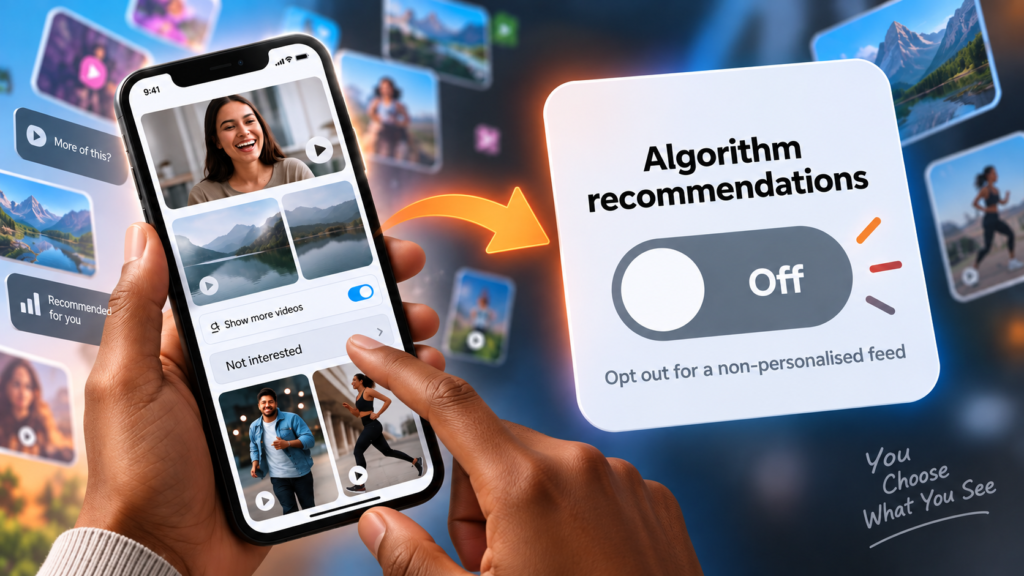
Australia is considering new social media rules that could give users more control over what they see online. The proposal may allow people to turn off personalised recommendation algorithms and use a simpler, chronological feed made mostly of posts from accounts they already follow.
The idea is still being discussed, so it is not a law yet. However, it could become an important part of Australia’s planned Digital Duty of Care rules for major technology and social media companies.
Australia Considers Social Media Algorithm Opt-Out Rules
The Australian government is looking at whether people should be able to opt in or opt out of social media recommendation algorithms.
These algorithms are used by platforms such as TikTok, Instagram, Facebook, YouTube, and X. They study a user’s activity to decide which posts, videos, creators, and topics to recommend.
For example, if a person watches several football videos, likes gaming clips, or pauses on a certain type of content, the platform may show them more of the same. This can make social media feel more personal, but it can also lead users into repeated streams of upsetting, misleading, or extreme content.
Under the proposal, Australians may get a clearer choice:
- Keep a personalised feed that recommends posts based on their activity.
- Turn off personalised recommendations.
- View a feed that mainly shows posts from people and accounts they chose to follow.
- See newer posts first, similar to how older social media feeds worked.
The proposal has been linked to a wider government plan called the Digital Duty of Care. This would put more responsibility on tech companies to identify and reduce risks before their products cause harm.
What Is a Personalised Social Media Algorithm?
A social media algorithm is a computer system that helps decide what appears in your feed.
Instead of simply showing posts in the order they were uploaded, many platforms rank content based on what they believe will keep you watching, tapping, commenting, and scrolling.
A personalised algorithm can use signals such as:
- Videos you watch until the end.
- Posts you like, comment on, share, or save.
- Accounts you follow or visit often.
- Topics you search for.
- Videos you skip quickly.
- Content popular with people who have similar interests.
- How long you stop and look at a post.
This is why someone can open TikTok, Instagram Reels, or YouTube Shorts and see videos from people they have never followed before.
That kind of discovery can be useful. It helps users find new creators, funny videos, tutorials, music, news, games, and communities. But critics say platforms may also recommend emotional, shocking, angry, sexual, or harmful content because it can hold attention for longer.
Researchers have warned that recommendation systems can repeatedly expose users to misogynistic, extremist, conspiratorial, or misleading content.
What Would a Chronological Feed Look Like?
A chronological feed puts posts in time order, usually with the newest posts at the top.
Instead of showing “recommended for you” posts from strangers, an account would mainly see updates from pages, creators, friends, and communities they have deliberately chosen to follow.
For example, imagine you follow:
- Five Roblox creators.
- Your school friends.
- A gaming news page.
- A football club.
- A local community page.
A chronological feed would show recent posts from those accounts first. It would not heavily depend on your watch history to send you an endless stream of suggested videos from unknown accounts.
This gives users a clearer answer to an important question: “Why am I seeing this post?”
Usually, the answer would simply be: “Because you chose to follow this account.”
However, a chronological feed is not completely free from technology or sorting systems. It still uses a basic algorithm to collect posts and arrange them by time. The key difference is that it does not heavily use personal behaviour data to predict what will keep you scrolling.
Opt-In vs Opt-Out: What Is the Difference?
The biggest detail is whether Australia uses an opt-in or opt-out system.
| System | Default Feed | What the User Must Do |
|---|---|---|
| Opt-out | Personalised recommendations are on by default | The user must find a setting and turn them off |
| Opt-in | A chronological/non-personalised feed is the default | The user must choose to turn recommendations on |
An opt-out system would mean users can leave the algorithmic feed, but the personalised feed would still be the standard setting when they create an account.
An opt-in system would go further. Users would begin with a feed from accounts they follow, arranged by time. If they wanted a “For You” style feed with recommended posts, they would need to actively enable it.
The group Teach Us Consent has called for an opt-in approach. Its campaign argues that people should give meaningful consent before platforms use recommendation systems to shape their attention and feed them suggested content.
Government figures have said they are considering both options, although reports suggest an opt-out model may be more likely than making chronological feeds the default.
Why Is Australia Looking at This Proposal?
The debate is mainly about online safety, especially for teenagers and younger users.
Social Services Minister Tanya Plibersek has said the government is concerned about social media feeds promoting violent and misogynistic material. She has argued that harmful recommendation systems can affect what young people learn about relationships, sex, violence, and gender.
The government’s wider Digital Duty of Care plan would require technology companies to take a more active role in reducing foreseeable harm. Instead of only responding after a user reports a dangerous post, platforms could be expected to design safer services from the beginning.
The algorithm proposal has also become part of a broader national conversation about:
- Online misogyny and hate.
- Exposure to violent content.
- Harmful sexual content.
- Misinformation and conspiracy theories.
- Addictive app design.
- Young people spending long periods scrolling through recommended videos.
Supporters say that allowing people to leave personalisation systems could reduce unwanted content recommendations and give users more control over their online experience.
Could Turning Off Algorithms Make Social Media Safer?
It could help, but it would not solve every problem.
A chronological feed may reduce the chance of a platform repeatedly pushing new recommended posts that a person never asked to see. It may also make social media feel less endless because users can catch up on recent posts from accounts they follow.
Supporters believe this could lower the power of apps designed to keep people scrolling for as long as possible.
However, there are important limits.
A chronological feed can still include harmful posts if they come from accounts a person follows. Misinformation, rage bait, offensive videos, and misleading claims can still be shared by friends, influencers, pages, or communities already in a user’s following list.
Social media also includes more than the main feed. Users can still encounter content through:
- Search results.
- Hashtags.
- Trending pages.
- Ads.
- Reposts and shares.
- Group chats.
- Direct messages.
- Suggested accounts.
- External links.
That means a chronological feed can be one useful safety tool, but it cannot replace content moderation, age protections, strong privacy rules, digital education, and better platform design.
Europe Already Has Similar Social Media Rules
Australia is not the first place to consider this type of change.
The European Union’s Digital Services Act requires very large online platforms to offer users at least one recommendation option that is not based on personal profiling. This has led major platforms such as Facebook and Instagram to offer alternative feed options in Europe.
But Europe has also shown why the details matter.
Giving users a choice is not enough if the choice is hidden inside settings, difficult to understand, or reset every time someone closes and reopens an app.
A Dutch digital rights group, Bits of Freedom, successfully challenged Meta over how Facebook and Instagram handled non-personalised feed options. The group argued that the option was hard to access and that users could be returned to personalised feeds after reopening the apps.
This is a major lesson for Australia. Any new rule would need to make the choice clear, easy to find, and permanent until the user decides to change it.
What Stronger Rules Could Include
If Australia introduces a social media algorithm opt-out law, effective rules could include:
- A simple setting visible when users create an account.
- A clear explanation of what a personalised feed does.
- A chronological feed option that stays enabled after closing the app.
- No confusing menus or repeated pop-ups that pressure users to turn recommendations back on.
- Easy switching between chronological and personalised feeds.
- Special protections for teenagers and other vulnerable users.
- Regular checks to make sure platforms are not hiding the non-personalised option.
- Rules that prevent platforms from making the chronological version slow, empty, or difficult to use.
The main goal would be genuine user choice, not a setting that exists only on paper.
How Would This Affect TikTok, Instagram, YouTube, and Facebook?
If the proposal becomes law, major social platforms could need to redesign parts of their apps for Australian users.
TikTok may need to offer a stronger alternative to its highly personalised “For You” feed. Instagram and Facebook may need to make chronological feeds easier to access and keep selected. YouTube could face questions about how recommendations work on its homepage, Shorts feed, and suggested video sections.
The exact effect would depend on the final wording of the law. Australia has not yet confirmed which platforms would be covered, how the rule would be enforced, or whether the default option would be opt-in or opt-out.
For regular users, the change could mean more control. People who enjoy recommended content could keep it. People who want a simpler feed could choose to see posts mainly from the accounts they follow.
Is Australia Banning Social Media Algorithms?
No. Australia is not currently proposing a complete ban on social media algorithms.
The proposal is about giving users a choice over personalised recommendations. Platforms could still use algorithms for many functions, including:
- Showing posts in time order.
- Filtering spam.
- Detecting harmful content.
- Moderating comments.
- Recommending accounts if a user chooses that feature.
- Showing advertisements.
- Improving search results.
- Organising notifications.
The main issue is whether platforms should be allowed to automatically use personal behaviour data to build highly targeted recommendation feeds for everyone by default.
When Could the New Rules Start?
There is no confirmed start date because the proposal is still under discussion.
The Australian government is preparing Digital Duty of Care legislation and has indicated that it will consult on the details. Before any change becomes law, the proposal would normally need to go through drafting, consultation, parliamentary debate, and approval.
This means Australians cannot yet rely on a new legal right to turn off personalised algorithms. For now, users should check the feed and recommendation settings already available on the apps they use.
Final Thoughts
Australia’s proposed social media algorithm rules could give people more control over their feeds and reduce the power of platforms to decide what captures their attention.
A chronological feed would not make the internet completely safe, and it would not remove harmful content from social media. But it could give users a clearer and simpler option: see recent posts from accounts they chose to follow instead of relying on endless recommendations from a platform’s personalisation system.
The real test will be whether the final rules make that choice easy, visible, and lasting. If the setting is hidden or difficult to use, most people may remain on the personalised feed by default. If Australia adopts a strong opt-in system, it could become one of the first countries to put usersnot engagement-driven algorithms in greater control of what appears on their social media feeds.