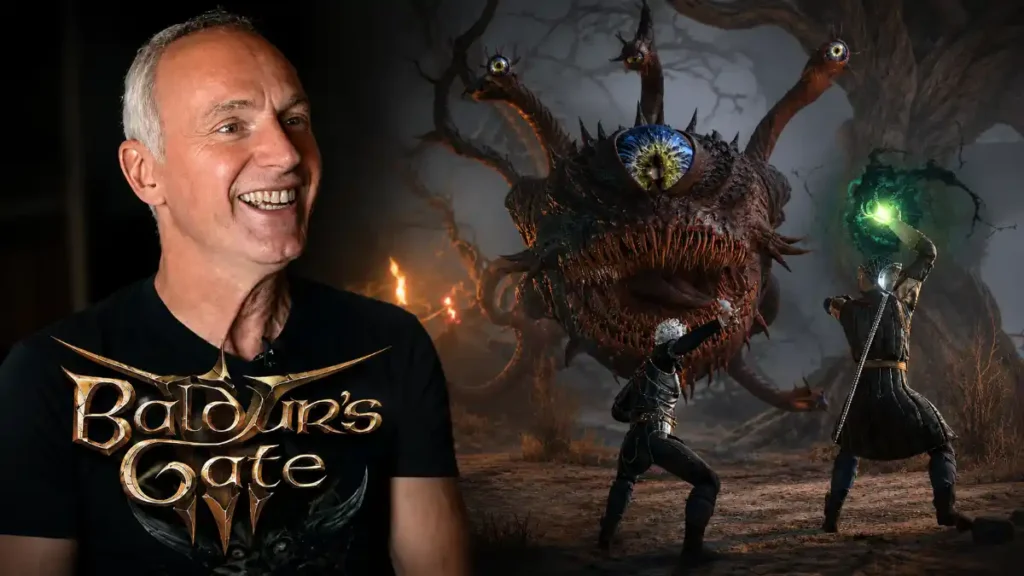
Baldur’s Gate 3 save scumming has always been part of the conversation around Larian Studios’ massive RPG, but the studio just revealed just how extreme some players take it. A handful of fans made more than 560 manual saves in a single playthrough. Others slammed the quicksave button over 1,400 times. Larian’s reaction was simple and perfect: “You doing okay there?”
That light-hearted jab captures the whole story. This isn’t about a bug or a patch. It’s about player behavior in a game built around dice rolls, branching dialogue, and combat that can swing on a single bad roll. When the stakes feel that high, many players reach for the save menu without thinking twice.
Why Baldur’s Gate 3 Save Scumming Feels Almost Inevitable
Baldur’s Gate 3 puts a lot of weight on chance and choice. Every persuasion check, every attack roll, every conversation option can lock you into a path you might not want. The game’s systems encourage experimentation, but they also make failure sting. A failed roll can mean a companion dies, a quest goes sideways, or an entire story branch closes off.
That pressure turns the save system into a safety net. Players load earlier saves to retry dice rolls they don’t like. They rewind conversations to pick better lines. They redo fights until the outcome matches the plan in their head. Over a full playthrough that can last dozens or even hundreds of hours, those retries add up fast.
Larian has always known this. Coverage around the game’s launch already talked about how save management became its own mini-game. Players debated the best ways to use quicksaves versus hard saves, and some ran into the game’s own limits on how many files they could keep. The studio designed a system that lets people play the way they want, and a lot of people want to control the randomness.
The Numbers That Made Larian Ask If Players Were Okay
The stats Larian shared are eye-catching for a reason. More than 560 manual saves in one playthrough is not casual. That’s someone carefully marking progress before every risky decision. Over 1,400 quicksaves is even more aggressive. That number suggests constant, almost automatic use of the quicksave function, often right before a roll or a tough fight.
These aren’t average players. Larian pointed to a small group of extreme cases. Most people will never come close to those numbers. Still, the extremes say something real about how the game is played. When the tools exist to undo almost any outcome, some players will use them as much as possible.
The tone from the studio stayed playful. There was no scolding. No lecture about “playing the game the right way.” Just a knowing joke that acknowledged the behavior without judgment. That approach fits Larian’s usual style. The team has always seemed happy to let players break systems, exploit quirks, and shape their own experience.
How Save Scumming Shapes the Baldur’s Gate 3 Experience
For many players, heavy saving is simply how they enjoy the game. They treat the dice as suggestions rather than final answers. They want to see the “best” version of a scene or make sure a favorite character survives a tough fight. In a game with so many possible endings and companion stories, the desire to protect those outcomes makes sense.
At the same time, the practice changes the feel of the adventure. Constant reloading can remove tension. A dangerous combat encounter loses its edge when you know you can just try again. A tense conversation becomes less meaningful when every failed check can be erased. Some players embrace that control. Others eventually decide to stop save scumming so the story feels more real.
The game itself does not force either approach. You can play with ironman rules and never reload, or you can save before every single roll. Both styles are valid. The extreme numbers Larian shared just show how far the second group is willing to go.
The Broader Conversation Around Saves in Modern RPGs
Baldur’s Gate 3 is not the first game where save scumming became a talking point, but it might be the one that made the practice most visible. The combination of D&D-style dice, deep reactivity, and long playtimes creates perfect conditions for it. Players talk about it openly. Outlets cover it. And the developers clearly track the data.
That visibility is useful. It reminds everyone that the save system is a core part of how people interact with the game. Designers who build systems full of randomness also have to decide how much control to give players over the results. Larian chose to give a lot of control, and players used it.
The joke about whether those heavy savers are “okay” works because it feels friendly. It acknowledges the behavior without turning it into a problem that needs fixing. In a hobby that sometimes gets too serious about the “correct” way to play, that lightness is welcome.
What These Extreme Saves Really Tell Us
The 560-plus manual saves and 1,400-plus quicksaves are not evidence that something is broken. They are evidence that the systems work exactly as designed for a certain kind of player. Those players want maximum agency over outcomes. The tools Larian provided let them have it.
Most players will never hit those numbers. Plenty will save more than they expected to. A few will decide the constant reloading is not worth the loss of surprise. All of those approaches fit inside the same game.
Larian’s decision to share the data with a wink instead of a warning keeps the focus where it belongs: on the playful relationship between the studio and its audience. Players push the systems. The developers notice. Everyone laughs a little. Then people go back to making yet another save before the next big roll.
Baldur’s Gate 3 save scumming at this scale is extreme, but it is also pure. It shows how much some players care about shaping every detail of their story. And Larian, true to form, seems perfectly fine with that.