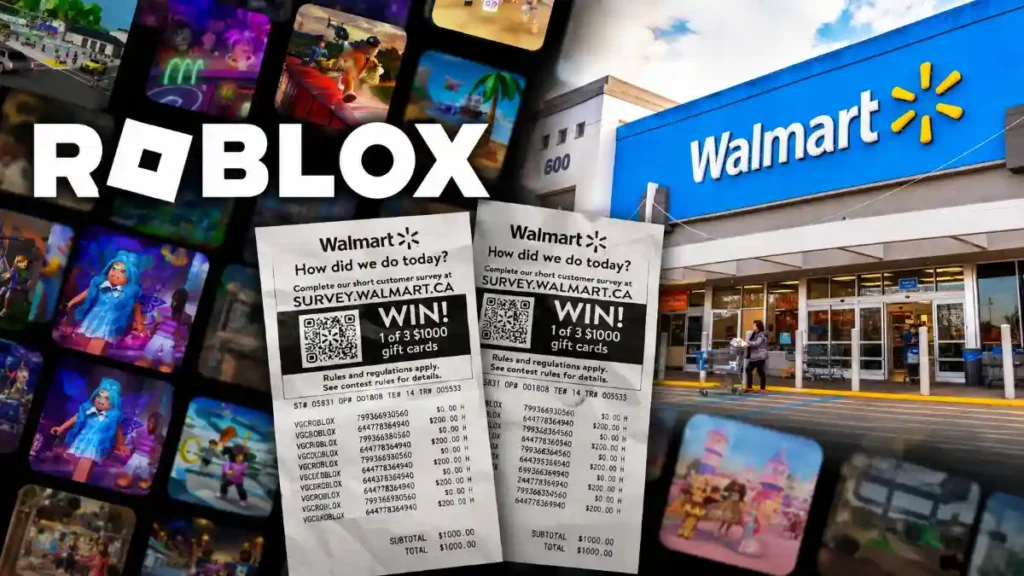
An 11-year-old boy in Ontario, Canada, took thousands of dollars from his parents’ emergency savings and used $2,000 of it to buy Roblox gift cards at Walmart. The story has quickly spread among parents and Roblox players because it shows how easily a determined kid can turn cash into game currency when store rules and age checks leave gaps.
The boy was shopping with his grandmother at a Walmart in Ontario when he slipped away long enough to complete the purchases. He paid in cash, splitting the total into two separate $1,000 transactions so he could stay under the store’s per-transaction gift-card limit. His family only discovered the missing money later, when they noticed thousands of dollars gone from the cash they had set aside for real emergencies. When they returned to the store with the unused cards and receipts, Walmart staff told them gift-card sales are final. No refund was possible.
Walmart Canada has confirmed that its employees followed existing policy. The company sets a $1,000 limit on gift-card purchases in a single transaction, but it does not place an age restriction on who can buy the cards. The boy simply made two separate cash transactions of $1,000 each. According to the retailer, a review of the receipts showed the $1,000 limit was applied correctly both times. Walmart has also said it contacted the family directly to discuss the situation.
This detail matters because many parents assume large cash purchases of digital currency cards would automatically raise red flags. In practice, the system treated the two transactions as independent, and the cashier had no policy requiring a parent or guardian to approve the sale.
Roblox’s own terms for gift cards and credits in the United States state that a person must be 18 or older to redeem them, or must have a parent or guardian’s consent if under 18. Redemption happens inside a Roblox account. The user logs in or creates an account and accepts the Terms of Use. For anyone under 18, parental consent is required at that stage.
Individual card issuers can also add their own conditions, including age-related rules, when the cards are actually redeemed. Buying the physical cards at a store is treated separately from the later step of turning them into Robux. That separation is part of why the Ontario purchase was able to happen so smoothly at the register.
Why This Story Resonates With Roblox Families
Parents who keep emergency cash at home suddenly see how vulnerable that money can become once a child knows where it is and how easily it converts into Roblox gift cards. The case also shows that per-transaction limits at big-box stores do not fully protect against determined kids who are willing to make multiple trips to the same register.
The incident has restarted conversations about whether retailers should add extra checks for large gift-card purchases by minors, especially when the cards are for popular games. At the same time, it puts fresh attention on the tools Roblox already offers parents. Account PINs, spending notifications, and monthly spend limits can stop unauthorized Robux spending after the cards are redeemed. Those controls do not prevent a child from buying the cards in the first place, but they can limit the damage once the cards reach the account.
Many families keep physical cash for emergencies precisely because it feels safer than digital payments. This story shows that cash can move just as quickly into a game when a child is motivated and the store has no age gate. It also highlights how gift-card policies written for adult shoppers create blind spots when the shopper is 11 years old and carrying a large amount of family money.
Practical Steps Parents Can Take Right Now
Parents who want to reduce the chance of a similar situation can start with a few concrete habits. Keep emergency cash in a place children cannot easily access without notice. Talk openly about the difference between real-world money and in-game currency so kids understand the actual cost of Robux. On the Roblox side, turn on parental controls, set a monthly spend limit that matches what the family is comfortable with, and enable notifications for any purchases. A PIN on the account adds another layer that a child cannot bypass without the parent’s knowledge.
Retailers could also tighten processes. Requiring adult verification for gift-card purchases above a certain amount, or for any large cash transaction involving game currency, would close the gap the Ontario boy walked through. Until those changes become standard, the responsibility sits mostly with families.
The story is not only about one boy and one Walmart. It is a reminder that the path from family savings to Roblox gift cards can be short when store rules, age policies, and parental oversight do not line up. By combining clearer conversations at home, stronger account settings on Roblox, and more careful handling of emergency cash, parents can lower the odds that the next large purchase ends up as Robux instead of a real-world safety net.
The Ontario case will likely stay in the news for a while because it is simple, expensive, and familiar to any parent who has watched a child fall deep into a free-to-play game. The $2,000 in Roblox gift cards is gone from the family’s emergency fund, and the store’s final-sale policy means it is not coming back. What remains is a clear lesson for other households: know where the cash is, know the limits at the store, and lock down the Roblox account before a determined 11-year-old decides the savings are better spent on the next big in-game item.
Hi there! I'm Khalid, your go-to guy for all things gaming, anime, and digital content. I'm a seasoned writer and blogger specializing in crafting engaging narratives and generating eye-catching images and media for these vibrant worlds.When I'm not immersed in virtual adventures or conjuring up captivating visuals, you'll likely find me enjoying the company of fellow enthusiasts.