The U.S. console market had a tough July 2026. Fewer people bought game systems, console prices climbed, and spending on new physical games dropped to a record low.
According to Circana market data, U.S. video game spending fell 10% year over year to about $4.5 billion in July. The biggest problems were in console hardware and boxed game sales. Hardware spending fell 29% to $282 million, while unit sales of consoles dropped 39%.
At the same time, the average price paid for a new console rose to $542. That is 16% higher than the average price in July last year.
U.S. Console Hardware Sales Drop
Americans spent $282 million on video game hardware in July 2026. That includes consoles such as the PlayStation 5, Xbox Series X|S, Nintendo Switch, and Nintendo Switch 2.
This was the lowest U.S. hardware spending total for a July since 2020. Hardware spending fell 29% from about $397 million in July 2025. More importantly, the number of consoles sold fell even faster, dropping 39% year over year.
That tells us something important: higher console prices may be making shoppers think twice before buying a new system.
The average price of a new console reached $542 in July. With prices up 16% from last year, many families may choose to wait for a sale, keep using an older system, or spend money on games and subscriptions instead.
Physical Game Sales Reach a New Low
The biggest warning sign came from physical games.
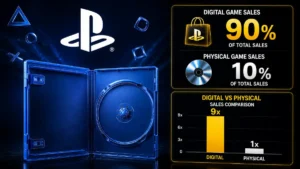
U.S. players spent just $85 million on new physical video games in July 2026. Circana has tracked the market since 1995, and this was the lowest July spending total for boxed games in its records.
Physical games include game discs, cartridges, and boxed editions sold in stores or online. They do not include digital downloads, in-game purchases, subscriptions, or most downloadable content.
This does not mean people stopped buying games. Instead, it shows that more players are choosing digital stores, subscription services, and live-service games. The total U.S. games market still generated around $4.5 billion in July, even though that figure was down 10% from the same month in 2025.
Related: Older PS5 Overheats After Liquid Metal Damages Heatsink
Nintendo Leads Physical Game Spending
Nintendo remains the clear leader in the shrinking physical-games market.
So far in 2026, Nintendo platforms accounted for around 63% of U.S. spending on new physical games. PlayStation came in second with 32%, while Xbox made up just over 4%.
| Platform | Share of U.S. new physical-game spending in 2026 |
|---|---|
| Nintendo | 63% |
| PlayStation | 32% |
| Xbox | Just over 4% |
Nintendo’s strong performance makes sense. Nintendo fans often buy physical cartridges, especially for family games, major first-party releases, and titles that players want to lend, trade, collect, or keep for years.
PlayStation still has a large share of physical spending, but it trails Nintendo by a wide margin. Xbox’s smaller physical share reflects how much its ecosystem has moved toward digital purchases, Game Pass, PC gaming, and multi-platform releases.
Why Console Sales Are Falling
There is no single reason for the July downturn. Instead, several trends are hitting the console market at the same time.
- Higher prices: The average cost of a new console reached $542, making a new system a bigger purchase for many households.
- Digital buying habits: Players increasingly buy downloads instead of discs or cartridges.
- Subscription services: Services such as Game Pass can reduce the need to buy individual boxed games.
- Older consoles still work well: Many players may not feel a strong need to upgrade when they already own a PlayStation 5, Xbox Series console, Switch, or gaming PC.
- Fewer physical Xbox releases: Xbox has leaned heavily toward digital distribution, which limits its share of physical-game spending.
The data also shows that the decline was not limited to hardware. Video game content spending fell 9% to about $4.07 billion, while accessories spending dropped 6% to $187 million.
What This Means for Gamers
For players, this market shift could mean fewer physical editions, fewer discs in stores, and more focus on digital storefronts. It may also encourage publishers to push subscriptions, deluxe editions, digital extras, and in-game purchases.
However, physical games are not disappearing overnight. Nintendo’s 63% share shows there is still a major audience for cartridges and boxed games. Physical copies remain useful for collectors, players with slower internet, families sharing games, and anyone who wants the option to resell or lend a game later.
The bigger story is that the U.S. game industry is changing. Players are still spending billions on games, but less money is going toward new consoles and boxed copies. July 2026 shows how quickly the market is moving toward digital gaming and how Nintendo remains the strongest name in physical software.