PlayStation’s Recent Decisions Are Losing Gamer Trust
For years, PlayStation was the home of unforgettable gaming experiences. Sony built its reputation by supporting big single-player adventures, creative Japanese studios, strong exclusives, and games that felt different from what players could find elsewhere. From God of War and The Last of Us to Bloodborne, Ghost of Tsushima, Marvel’s Spider-Man, Shadow of the Colossus, and Astro Bot, PlayStation gave gamers a reason to buy into its ecosystem.
That is why Sony’s recent decisions have been so difficult for many fans to accept.
In only a few years, PlayStation has closed studios, cancelled games after long development periods, made a costly live-service push, struggled with the Bungie acquisition, shut down Concord weeks after launch, closed Neon Koi before its first game released, ended its partnership with Hideo Kojima on PHYSINT, and announced that new PlayStation games will no longer receive physical discs from 2028.
Every decision may have a business reason behind it. Sony is a major company, and it must manage costs, reduce risk, and satisfy investors. But from a gamer’s point of view, the bigger picture looks worrying. Many fans believe PlayStation is moving away from the creative, player-focused identity that made it special in the first place.
Sony has not stopped making single-player games, and not every decision has been bad. However, the company has created a growing trust problem. Here is why so many PlayStation fans feel ignored.
PlayStation did not become successful only because it had powerful consoles. Its biggest strength was variety.
Sony supported blockbuster action games, but it also gave room to creative and unusual projects. Players could enjoy cinematic adventures, Japanese role-playing games, platformers, horror games, racing games, remakes, experimental games, and multiplayer titles under one platform.
That mix helped PlayStation stand apart.
A player could buy a PlayStation for God of War, then discover Gravity Rush, Patapon, LocoRoco, LittleBigPlanet, Ape Escape, or The Last Guardian. These games may not have all sold like Call of Duty, but they gave the brand personality.
Today, fans worry that Sony is becoming too focused on a smaller number of things:
Big blockbuster games with massive budgets
Live-service games with recurring spending
Digital game sales
PC releases
Subscription services
Safe franchises with clear profit potential
These areas can all be useful. The problem is that PlayStation risks losing its creative balance when business goals become more important than gaming variety.
Closing Japan Studio Was a Major Warning Sign
The closure of Japan Studio remains one of Sony’s most painful decisions for longtime PlayStation fans.
Japan Studio was one of PlayStation’s oldest and most important internal teams. It helped create or support many games that gave Sony its Japanese identity. The studio was connected to games and franchises such as Ape Escape, Gravity Rush, LocoRoco, Patapon, Everybody’s Golf, The Last Guardian, Knack, and Bloodborne.
These games were not all huge commercial hits. But they mattered because they were different.
Japan Studio was known for trying ideas that other major publishers might avoid. Some projects were strange, colorful, emotional, or experimental. That was exactly why many gamers loved them.
Sony did keep Team Asobi, the group behind Astro Bot. Team Asobi has proven that PlayStation can still create joyful and original games. However, shutting down the wider Japan Studio still sent a clear message to fans: unique games that do not fit a major blockbuster or live-service plan may not be safe inside PlayStation anymore.
For many players, this was the start of a major shift in Sony’s priorities.
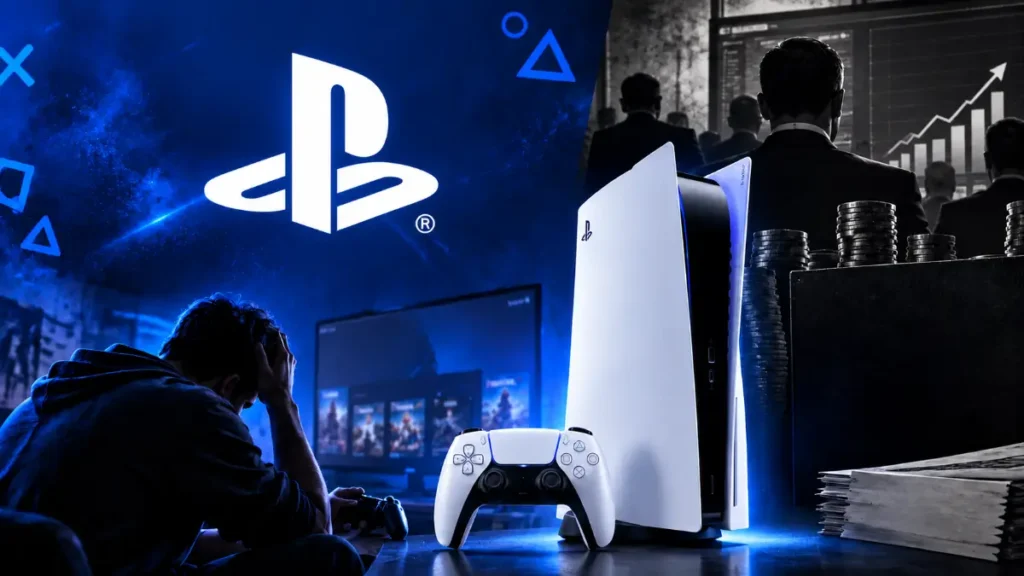
PlayStation latest years has been full of terrible decisions that were clearly focused on investors and ignoring gamers
>Closing Japan Studio, Sony shut down one of its most unique first-party studios.
Sony’s move into live-service games is at the center of many recent problems.
A live-service game is designed to keep players active for a long time. Instead of earning most of its money only at launch, the game can make money through seasons, battle passes, cosmetics, expansions, and other regular purchases.
This model can be extremely profitable when it works.
Games such as Fortnite, Roblox, GTA Online, Call of Duty: Warzone, Apex Legends, and Destiny 2 have shown that players will spend money for years if a game keeps them interested.
Sony wanted to build more games like that.
At one point, PlayStation planned to launch 12 live-service games by the end of the 2025 financial year. The company later delayed several of those games and reduced its near-term plans. This showed that Sony understood it had moved too quickly into a difficult and crowded market.
Making one successful live-service game is hard. Making many of them is even harder.
A multiplayer game must give players a reason to return every day or every week. It needs good gameplay, a strong community, fair updates, interesting events, regular content, and enough players to keep matchmaking active.
It also has to compete with games that already own players’ time.
Most gamers do not have time to play ten live-service games at once. They may spend hundreds of hours in Fortnite, Roblox, Call of Duty, Destiny 2, or GTA Online. Convincing them to leave those games for a new title is very difficult.
Sony seemed to chase the idea of a giant live-service hit without fully respecting how hard that goal is.
The Last of Us Online Shows the Cost of This Strategy
The Last of Us Online is one of the clearest examples of PlayStation’s live-service problems.
Naughty Dog worked on a large multiplayer game set in the world of The Last of Us. This was exciting because the first game had a multiplayer mode called Factions, which built a loyal fanbase. Many players hoped Naughty Dog would create a bigger and better version of that experience.
However, the studio cancelled The Last of Us Online in late 2023.
Naughty Dog explained that supporting the game after release would require years of constant work. The studio would need to keep producing seasonal updates, new content, technical fixes, balance changes, events, and ongoing support.
That could have changed Naughty Dog into a studio mainly focused on running one multiplayer game.
Cancelling the project was probably the responsible decision. It allowed Naughty Dog to protect its ability to make the single-player games that made it famous.
But players still lost something important.
Years of development work went into a game that will never be released. Fans never got to play it, and Naughty Dog likely had to delay or rethink other projects while it was in development.
This is what makes Sony’s live-service strategy so frustrating. The company chased a business model that could have pulled one of its best single-player studios away from its core strength.
Concord Became a Huge PlayStation Failure
No game better represents Sony’s live-service gamble than Concord.
Sony released Concord in August 2024 as a team-based hero shooter. The game was developed by Firewalk Studios, a team Sony had acquired because it believed the studio could make a major multiplayer franchise.
But Concord struggled almost immediately.
The game entered a market full of powerful competitors. Players already had Overwatch 2, Apex Legends, Fortnite, Valorant, Marvel Rivals, and many other multiplayer shooters to choose from. Concord did not give enough players a strong reason to switch.
Many gamers also felt the game lacked a clear identity. It did not generate enough excitement before release, and its paid price made it harder to attract players in a market where many major multiplayer games are free to play.
Sony took Concord offline only weeks after launch. Players received refunds, the game was permanently shut down, and Firewalk Studios was closed in October 2024. Sony said some parts of the game failed to connect with enough players and that the title did not reach expectations.
This was not just a normal game failure. It was a full collapse.
Sony invested money into the game, acquired Firewalk, spent years on development, marketed the release, refunded players, shut the game down, and then closed the studio behind it.
For PlayStation fans, Concord became proof that the company was willing to take huge risks on live-service games while closing studios that had already created beloved games.
Neon Koi Was Closed Before Its First Game Released
Sony’s closure of Neon Koi added even more frustration.
Neon Koi was a mobile-focused studio that Sony had acquired as part of its plan to expand beyond consoles. The studio was working on an action game known as Project: Greet.
But the game never got the chance to release.
Sony closed Neon Koi in October 2024, before the studio launched its first title. PlayStation said it was refocusing its resources on projects that better matched PlayStation Studios’ strengths and could reach more players.
The decision may make sense from a business point of view. Companies sometimes cancel projects when budgets, schedules, or market conditions change.
However, it still looked bad for Sony.
The company bought a studio, gave it a project, and then shut it down before players could see what it was making. That made PlayStation look uncertain about its own mobile strategy.
Sony wanted to grow in mobile gaming, PC gaming, and live-service games. But the Neon Koi closure showed that these plans were not as stable as they first appeared.
Bungie Was Supposed to Help Sony
Sony bought Bungie for about $3.6 billion in 2022.
This was one of PlayStation’s biggest purchases. Bungie had years of experience with online gaming after creating Halo and Destiny. Sony wanted Bungie to help guide its live-service plans and review upcoming multiplayer projects.
On paper, the deal made sense.
Sony had strong single-player studios but less experience running long-term online games. Bungie had experience with seasonal content, expansions, community management, player retention, and the difficult work of keeping a live game active.
But the Bungie deal has not been smooth.
The studio has faced multiple rounds of layoffs and major restructuring since joining Sony. Reports in 2026 said Sony cut 292 jobs at Bungie after the end of Destiny 2 development plans changed, following earlier cuts that affected hundreds of workers.
It is not fair to say Destiny 2 is dead. The game still exists, and Bungie remains one of the biggest live-service developers in the industry.
Still, fans have a valid question: what did Sony gain from spending $3.6 billion if Bungie later faced layoffs, uncertainty, and reduced independence?
Sony may still benefit from Bungie’s experience in the future. But the purchase has not yet looked like the major success many expected.
Bluepoint and Bend Lost Years of Work
Sony also cancelled live-service projects at Bluepoint Games and Bend Studio in 2025.
Bluepoint Games was best known for remakes and remasters. The studio worked on the Shadow of the Colossus remake and the highly praised Demon’s Souls remake for PlayStation 5. Fans hoped Bluepoint would make another remake, revive an older PlayStation franchise, or create a new premium single-player game.
Instead, Bluepoint reportedly spent years working on a live-service God of War project.
Sony cancelled that project in January 2025. Bend Studio also lost its own unannounced live-service game at the same time. Sony said both studios would remain open after the cancellations.
However, Bluepoint was later reported to be shutting down in 2026.
This makes the story even more disappointing. A studio known for carefully rebuilding classic PlayStation games spent time on an online game that never launched, then later faced closure.
Fans are not angry simply because Sony cancelled a game. They are angry because Sony appeared to move studios away from what they did best.
Bluepoint had proven it could handle premium remakes. Bend had experience making large single-player action games. Instead of building on those strengths, Sony pushed both teams toward live-service projects in a crowded market.
The PHYSINT Situation Is a Huge Loss
Sony’s decision to step away from Hideo Kojima’s PHYSINT is one of the latest shocks for PlayStation fans.
PHYSINT was announced in 2024 as a new action-espionage game from Kojima Productions. The project excited players because it appeared to be Kojima’s return to the stealth-action genre that made him famous through Metal Gear Solid.
The game also felt like a natural PlayStation project.
Kojima has a strong history with Sony, especially after PlayStation supported Death Stranding. Many fans believed Sony and Kojima Productions would continue working together for years.
But PlayStation later stepped away from PHYSINT. Kojima Productions said it received unexpected notice in mid-June 2026 that Sony would cancel the project under their partnership. Xbox has now become the publisher, and development is continuing.
Sony described its decision as a difficult one made after careful consideration. The company also said its wider relationship with Kojima Productions remains strong.
The exact reason behind Sony’s decision is not public.
There is no confirmed evidence that Sony and Kojima disagreed about a physical edition, ownership rights, budgets, or any other specific issue. Fans should avoid treating rumors as facts.
Still, the result is clear: PlayStation walked away from a major Kojima project, and Xbox gained it.
For many players, this is a painful symbol of Sony losing confidence in the kind of big, creative partnerships that once helped define PlayStation.
Sony Is Ending Physical Discs for New Games
Sony has also upset collectors and physical-game buyers by announcing plans to stop producing physical discs for new PlayStation releases starting in January 2028.
New PlayStation games will still be sold through digital stores and participating retailers. However, retailers may sell download codes instead of actual game discs. Games released before the change will not be affected.
Sony says the decision reflects the growing popularity of digital purchases.
That may be true, but physical games still matter to millions of players.
Physical copies provide benefits that digital games cannot fully replace:
Players can resell, trade, borrow, or buy used copies
Collectors can build shelves of games they truly own
Used discs can be cheaper than digital store prices
Players are less dependent on a company’s online store
Physical releases help game preservation
A disc can still work even if a digital listing is removed
Digital games are convenient, especially for players who prefer quick downloads. But an all-digital future gives platform holders more control over game prices, game availability, store policies, and player access.
For many longtime PlayStation fans, ending physical discs feels less like progress and more like losing another player-friendly option.
PlayStation Has Not Abandoned Single-Player Games
It is important to be fair: Sony has not abandoned single-player gaming.
PlayStation still owns some of the industry’s best studios and franchises. It has God of War, Marvel’s Spider-Man, Horizon, Ghost of Tsushima, The Last of Us, Ratchet & Clank, Astro Bot, and more.
Sony also still knows that major single-player games are a key reason people buy PlayStation consoles.
The issue is not that Sony makes no story games.
The issue is that Sony’s recent decisions make fans worry about what comes next. A company can support single-player games while also slowly shifting money, studios, and attention toward live services, subscriptions, digital sales, and recurring spending.
That is exactly what many players fear is happening.
Gamers do not want every PlayStation studio to make the next battle royale, hero shooter, or seasonal multiplayer game. They want variety.
They want big story games, small creative games, Japanese games, platformers, remakes, horror games, multiplayer titles, experimental ideas, and brand-new IP.
That variety is what built PlayStation.
Sony Needs to Rebuild Gamer Trust
PlayStation is still one of gaming’s biggest brands. Sony has the money, talent, studios, and franchises needed to recover from its recent mistakes.
But rebuilding trust will take more than a few good game announcements.
Sony needs to show players that it has learned from its failures.
Here are the changes many fans want to see:
Stop Forcing Every Studio Toward Live Service
Live-service games can work, but they should only be made when a studio has the right idea, skills, and long-term plan.
Not every developer should be pushed to make an online multiplayer game just because recurring revenue looks attractive.
Support Studios With Clear Strengths
Bluepoint should have been allowed to use its remake skills or create a focused new game. Bend Studio should have had the chance to build on the open-world action experience it developed with Days Gone.
Sony should invest in what each team does best instead of following one company-wide trend.
Protect Creative and Smaller Projects
Not every PlayStation game needs to cost hundreds of millions of dollars or become a global live-service hit.
Sony needs room for projects like Gravity Rush, Patapon, LocoRoco, Astro Bot, and other games that add variety to the platform.
These games may not always become the biggest sellers, but they create loyal fans and give PlayStation character.
Be More Careful With Studio Closures
Closing a studio should always be the last option.
When a studio shuts down, players lose future games, developers lose jobs, and years of knowledge disappear. It also damages trust between Sony and the creative teams it wants to work with.
Respect Physical Game Buyers
Digital gaming is growing, but Sony should not act like physical players no longer matter.
Collectors, families, used-game buyers, and people with limited internet access all benefit from disc releases. Sony should find ways to keep physical ownership alive, even as its digital business grows.
Final Thoughts
PlayStation’s recent decisions are losing gamer trust because they do not feel like separate mistakes anymore.
The closure of Japan Studio, the expensive push toward live-service games, the cancelled The Last of Us Online, the Concord disaster, the Firewalk closure, the Neon Koi shutdown, the difficult Bungie situation, cancelled projects at Bend and Bluepoint, the loss of PHYSINT, and the end of physical discs for future PlayStation games all point toward the same concern.
Sony appears to be chasing growth, predictable revenue, digital control, and investor confidence.
Those goals are understandable for a large company. But PlayStation became successful because it gave gamers experiences they could not get anywhere else. It succeeded because it supported creativity, memorable stories, unique studios, and a wide range of games.
Sony does not need to stop making live-service games. It needs to stop treating them as the answer to everything.
If PlayStation wants to rebuild trust, it must remember what made fans care about the brand: great games, creative risks, player choice, and studios that are allowed to make the games they do best.