Steam game approvals can now take up to 12 business days, longer than Valve’s usual target of three to five business days. Steam, Valve’s PC gaming storefront and launcher, reviews games before they can release, making that wait important for developers and players following upcoming launches. In a November 3 Steamworks announcement, Valve acknowledged the backlog and outlined new pre-release checks. Those checks include running a game through Steam for at least five minutes. Here is what changed, why it matters, and what remains unconfirmed.
Key Takeaways
- Valve says game-build reviews can currently take up to 12 business days instead of the usual three to five.
- Increased submissions and repeat reviews are contributing to the backlog.
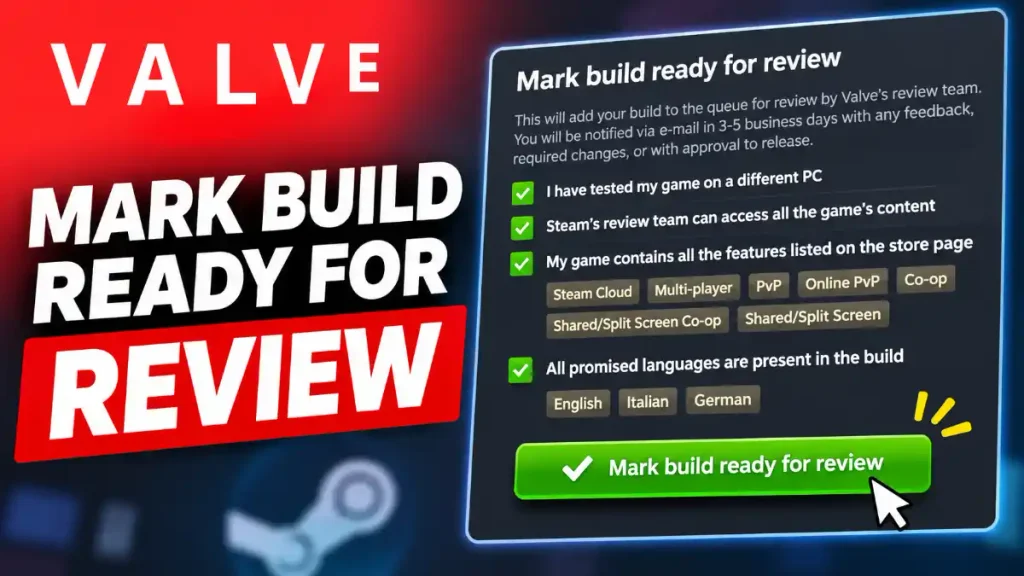
- New checklist items cover Steam playtime, required software, achievements, cloud saves, and store screenshots.
- Valve has not announced when review times will return to normal.
As of November 2026, Valve’s changes are aimed at helping developers catch basic problems before submitting a game. The goal is to reduce repeat reviews, not to introduce a fixed 12-day waiting period for every release.invenglobal+2
Why Steam Game Approvals Are Taking Longer
Valve says it has seen a “significant increase in submissions for store page and build review in recent months.” The company has been working to expand its review process, but the queue is taking longer to clear.
The problem is not just the number of submissions. Valve says much of the delay comes from having to review games again after an earlier submission needs changes.
That creates extra work for both sides. Developers must fix the problems and return their builds for another check, while Valve’s reviewers spend more time on games that have already passed through the queue once.
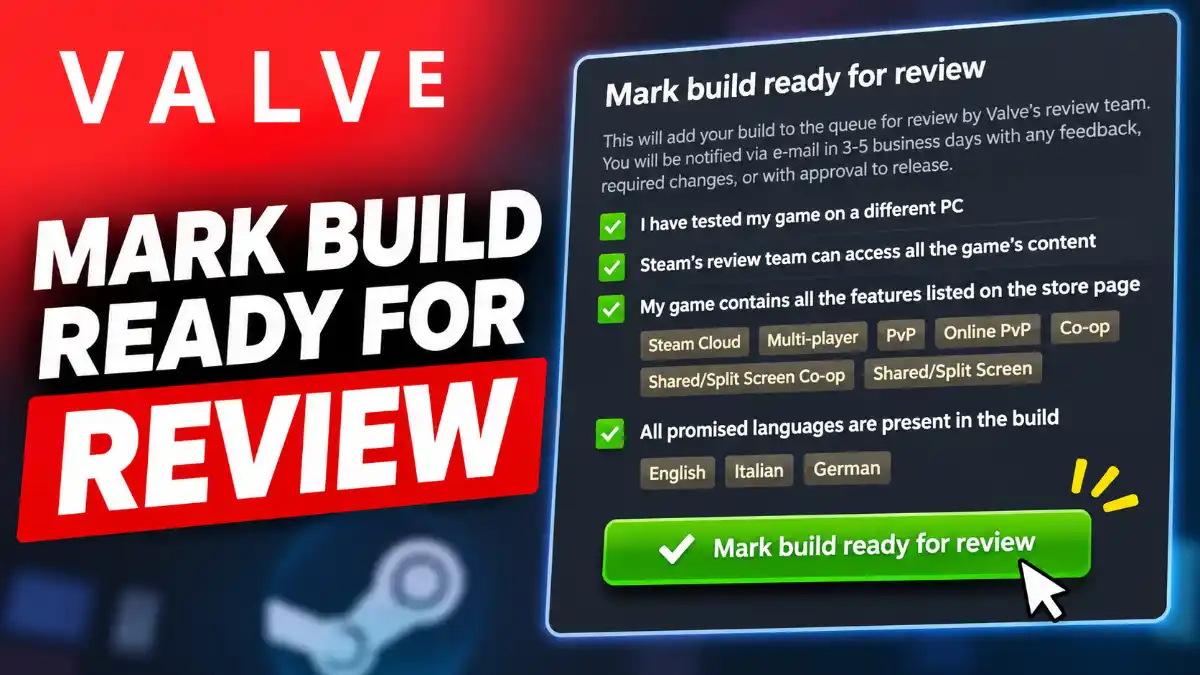
A build is the version of a game submitted for testing. Valve’s pre-release review checks that the game works as expected, matches its store-page claims, and has the required information and disclosures. It is separate from the user reviews players write after buying or playing a game.mixed-news+1
Twelve business days does not mean every game takes that long
Valve’s wording is “up to 12 business days.” It has not said every submission will take the full period.
Business days also differ from calendar days. A wait of 12 business days can stretch beyond two calendar weeks, which matters when a studio is trying to meet an announced launch date.
The figure should be treated as Valve’s current reported review window—not a permanent policy or a guaranteed deadline.
What Valve’s New Pre-Release Checks Cover
The most noticeable addition asks developers to run their game through Steam for at least five minutes before submitting it.
However, the checklist covers more than playtime. Other checks focus on the software a game needs, the features listed on its store page, and the screenshots customers see before purchasing.
| Checklist area | What developers need to check |
|---|---|
| Steam playtime | Run the game through Steam for at least five minutes before review. |
| Required software | Confirm which common redistributables the game needs, or state that none are required. |
| Achievements | Fix incomplete achievement information, including missing names or icons. |
| Steam Cloud | For games advertising cloud saves, write a save file to the service to test the setup. |
| Store screenshots | Categorize screenshots appropriately and include at least five marked as gameplay. |
Common redistributables are supporting software packages, such as DirectX or Visual C++, that some games need to run. Selecting the correct packages helps Steam install those requirements for players.mixed-news+1
Why launching through Steam matters
A game working on a developer’s computer does not automatically mean its Steam installation works correctly.
A developer might open the game’s executable file directly during testing. That can miss problems involving Steam launch settings or content that is absent from the uploaded build.
Valve addressed that gap directly:
“Believe it or not, sometimes we review builds that have not ever been played through Steam.”
Running the game through Steam’s Play button checks a different part of the release process: whether the Steam version starts and runs through the launcher players will actually use.
The developer does not have to supply all the playtime
The five-minute check does not mean the developer must personally play the game.
According to reporting on the announcement, any user’s recorded playtime can count. The timing matters: it must fall within the past seven days, or since the latest build upload when that upload was more than seven days ago.
The checklist may also take a few minutes to reflect recorded playtime after the game closes. This is a basic functionality check, not a substitute for testing performance, progression, crashes, or other issues across the full game.
What the Backlog Means for Upcoming Releases
The immediate concern for developers is reduced room to handle problems before launch.
If an initial review identifies something that needs fixing, a studio must make changes and go through another review. A longer queue makes that process harder to fit around a planned release.
For players, this means an upcoming game’s launch plans can be affected by approval timing as well as development progress. However, Valve has not said every upcoming release is delayed, and a long review does not automatically mean a game has serious technical problems.
The new checklist is intended to catch avoidable mistakes earlier. Passing those checks does not guarantee immediate approval, but it addresses issues that can otherwise send a submission back for corrections.mixed-news+1
Related:Steam Age Verification in Australia Requires a Credit Card for R18+ Games
Valve has not confirmed AI caused the delays
Some coverage has connected the backlog with concerns about AI-generated and low-effort games.
Valve’s explanation in this announcement is narrower: submissions have increased, and repeat reviews account for much of the delay. Its update does not identify a particular type of game or development tool as the cause.
That distinction matters. Increased submissions are confirmed; a claim that AI games caused this backlog is not established by Valve’s announcement.